

Ashwagandha (Withania somnifera) and milk have been used together for centuries in Ayurveda. Ayurvedic practitioners believe that the combination of Ashwagandha and milk can provide numerous health benefits, including improving sleep, reducing stress and anxiety, boosting immunity, and promoting overall wellness.1,2
It is an adaptogenic herb that is believed to help the body cope with stress and improve overall physical and mental health. Milk, on the other hand, is a nutrient-rich beverage that is known for its ability to provide strength and nourishment to the body.
Together, Ashwagandha and milk create a powerful combination that can help support various aspects of health and wellness. In this blog, we will explore the benefits of Ashwagandha and milk, as well as how to prepare and consume this potent elixir to promote optimal health.
According to Ayurveda, the traditional medical system of India, it’s best to take Ashwagandha with milk. Why?
Before diving into the question, a little context!
In Ayurveda, an anupana is a way that herbal medicine is administered (usually referred to as an after drink which is taken after a meal or medicine for nourishment). It is a means that assists the action of the herb. It forms an integral part of Ayurvedic treatment or chikitsa.
The herb (oushadha) becomes more potent when given with a suitable vehicle by considering the stage and strength of the patient and the disease. In this context, milk acts as an anupana when taken along with Ashwagandha.
The healing properties of milk
Milk is often celebrated as a comprehensive source of nutrition, with cow’s milk standing out as one of the most frequently chosen options among the various varieties available.
According to the ancient Ayurvedic text, the Charaka Samhita, cow milk is beneficial to the mind and body. It is sweet (madhu), cool, soft, and pleasant in taste.

It has a cool potency and a sweet post-digestive effect (vipaka). Its overall characteristic effect is pleasing to the mind.
Ayurveda considers milk to be the ‘after drink’ (anupana) for rejuvenating the body’s seven tissue systems. In Ayurveda, these are called dhatus.
Milk is especially good for the blood (rakta), bone (asthi), plasma (rasa), reproductive system, and rasa dhatu which includes the plasma, or the noncellular portion of the blood, the lymph, and interstitial fluids. Milk brings Vata and Pitta into equilibrium.
Ayurveda says that milk enhances the essence of all the tissues (ojas) as both of them possess similar properties. It’s also beneficial for the bodily tissues (dhatus). Milk is an ideal drink for the aged and for children.
Interested in learning more about Ayurveda’s take on Nutrition?
The Ayurveda Experience teamed up with Todd Caldecott (Ayurvedic Practitioner, Nutritionist, Herbal Medicine Specialist, Teacher, and Author) to create an educational course that uncovers common food myths, teaches you how to eat right for your constitution, unearths the eight, all-important guidelines for Ayurvedic eating, how/when/why you should use Ashwagandha, and much, much more. Find out more about this all-inclusive course on Holistic Nutrition below.

Ayurvedic uses of milk
According to Ayurveda, the consumption of milk helps increase power, body mass, and appetite.4 Milk taken at night induces sound sleep.6
In Ayurveda, it is said that when taken during childhood, it increases appetite, prevents deprivation, and increases strength. In old age, milk is taken to increase semen (shukra dhatu).6 Milk can also ignite agni – the digestive fire. It increases aphrodisiac power and body mass.
The effect of milk taken between noon and evening is energetic and useful in renal disorders. Ashwagandha taken in a cup of hot milk twice a day may also help prevent brittle nails.6
What is Ashwagandha?
Ashwagandha (Withania somnifera) is also known as Indian ginseng or Indian winter cherry. The roots and leaves of Ashwagandha are used in Ayurvedic medicine. It is considered to be both a tonic and a sedative herb due to its adaptogenic properties.
Ashwagandha is bitter and astringent in taste, has light and unctuous properties, is hot in potency, and has a sweet post-digestive effect. It reduces Kapha and Vata dosha (vatakaphahara).
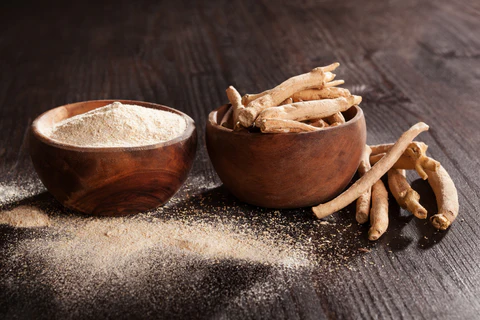
Ayurvedic properties of Ashwagandha
According to the ancient classical medical texts of Ayurveda, Ashwagandha has the following medicinal benefits.
- It can increase sexual desire, rejuvenate the body, and increase strength. It can be useful in treating emaciation under nutritive conditions.
- Ashwagandha is useful in the management of white discoloration of the skin, and edema.
- It pacifies Vata and Kapha dosha and acts as a rasayana (rejuvenative), balya (provider of strength), and promotes sexual wellness.
- It can also have an anabolic-like effect on men and may improve the quality and quantity of semen.
Why Ashwagandha with milk in Ayurveda?
An important Ayurvedic principle implies that Ashwagandha should be taken with milk. Ayurveda says that milk intensifies and complements the tonic and nutritive effects of Ashwagandha.
Both Ashwagandha and milk have similar properties. They are considered rejuvenators (rasayanas). Both Ashwagandha and milk nourish the ojas (life essence). They bestow one with the energy to live. This is referred to as jivaniya. Their combined synergistic effect increases their potency.
Having such similar properties makes them the right combination when it comes to health benefits. The combination may even pacify all three doshas.
ADVERTISEMENTS
Following this logic, Ashwagandha is best taken with milk, and this is documented in the following references.
- Taking Ashwagandha with milk can give better results in cases of emaciation and tuberculosis7.
- Ashwagandha-treated milk can be beneficial in gaining muscular strength in emaciation5. Ashwagandha helps with weight management7 especially when taken with milk.
Research on Ashwagandha
This herb has been studied as an adaptogenic, antioxidant, anxiolytic, antidepressant, and cardioprotective.
It is shown to have thyroid-modulating, immunomodulating, antibacterial, antifungal, anti-inflammatory, neuroprotective, cognitive enhancing, and hematopoietic effects9.
Gangliosides, one of the components found in milk, are also present in nerve tissues10. Due to the presence of these components in milk, it promotes the absorption of herbs more significantly than others do.
So, milk is the best vehicle for Ayurvedic herbs like Ashwagandha.
Time-tested Ashwagandha with milk remedies + traditional Ayurvedic remedies
Please note that milk, when taken warmly, is easily digestible and helps to destroy Kapha and Vata dosha.
If you wish to take Ashwagandha with milk, consult your healthcare provider to ensure it’s right for you. For the best results, enjoy it warm, in milk that has been boiled.

For male and female infertility 6
Two grams of Ashwagandha powder twice daily with a little rock candy and warm milk.
For physical weakness/fatigue6
Two grams of Ashwagandha powder with 125 mg of trikatu powder. Drinking a cup of Ashwagandha tea once or twice a day helps with fatigue.
Trikatu contains three pungent herbs: dried ginger (soonth), black pepper (marich), and long pepper (pippali). This combination is traditionally taken twice a day with milk. Ashwagandha can help with fatigue, and its benefits are compounded when taken with milk.
Allergic rhinitis1
An equal quantity of turmeric, ginger, and Ashwagandha powders are mixed well and consumed twice daily with milk before food.
Insomnia1
Mix 5 grams of Ashwagandha root powder in a cup of milk. You can add sugar if you like and drink before going to bed every day.
For osteoarthritis1
Two grams of Ashwagandha powder, kapikacchu, and black sesame seeds in 5 gms of warm milk.
For nutritional deficiency in children
Ashwagandha Milk Tea: To make a tea of Ashwagandha powder and milk, take half a glass of water and half a glass of milk in a pan.
Add one gram of Ashwagandha powder and bring to a boil. When it’s reduced to half, allow it to cool, add sugar and enjoy.
General restorative
Ashwagandha powder with milk can also be taken as a general tonic to restore vitality. Two grams with one cup of warm milk, twice daily.
NOTE: These are classical Ayurvedic remedies for health conditions. It’s best to consult a qualified Ayurvedic practitioner before trying any of these remedies.
Delicious and healthy Ashwagandha with milk recipe
Recipe
Ingredients
- 4 cups of milk
- 10 grams of Ashwagandha powder
- 1 tsp Sugar
Method of preparation
- Add 4 cups of milk and 10 grams of Ashwagandha powder to a pan.
- Simmer the mixture until its appearance turns to a thick paste similar to condensed milk. Then remove it from the heat.
- Let the mixture sit for 5 minutes. Add 1 tsp of sugar. Serve, and enjoy!
Frequently Asked Questions
Why is ashwagandha traditionally taken with milk in Ayurveda?
In Ayurveda, milk is considered an “anupana,” a carrier that enhances the delivery and effectiveness of herbs. Combining ashwagandha with milk is believed to amplify its rejuvenating and calming properties, promoting better absorption and efficacy.
How does ashwagandha with milk benefit sleep?
Ashwagandha is known for its adaptogenic properties, helping the body manage stress. When combined with the calming effects of warm milk, it can aid in reducing anxiety and improving sleep quality.
Are there specific benefits for men consuming ashwagandha with milk?
Ashwagandha has been linked to increased testosterone levels, improved sperm quality, and enhanced muscle strength in men. Combining it with milk may further support these benefits due to milk’s nourishing properties.
What benefits does ashwagandha with milk offer for women?
For women, ashwagandha can help balance hormones, reduce menstrual discomfort, and alleviate symptoms of menopause. Milk enhances these effects by providing essential nutrients and promoting overall well-being.
Can ashwagandha with milk aid in weight management?
Ashwagandha may help regulate cortisol levels, reducing stress-induced cravings and supporting weight management. While milk adds calories, its protein content can promote satiety, aiding in appetite control.
Is it safe to consume ashwagandha with milk daily?
For most individuals, daily consumption is safe. However, it’s essential to consult with a healthcare professional, especially if you’re pregnant, breastfeeding, or on medication.
How should ashwagandha with milk be prepared for maximum benefits?
Combine 1/2 teaspoon of ashwagandha powder with a cup of warm milk. Optional additions include a pinch of cinnamon, nutmeg, or a teaspoon of honey for flavor and added benefits. Consume 30 minutes before bedtime.
Are there any side effects of consuming ashwagandha with milk?
While generally safe, some individuals may experience digestive discomfort or drowsiness. It’s advisable to start with a small dose to assess tolerance.





0 Comments