

The golden Turmeric spice, with its radiant hue and potent properties, has been revered for millennia in traditional Indian medicine. It’s the cornerstone of holistic wellness that continues to captivate the modern world with its extensive range of benefits. We are referring to none other than turmeric or Haridra, as it is called in the ancient science of Ayurveda.
From ancient Ayurvedic texts to contemporary scientific journals, haridra’s reputation as a “wonder herb” is well-deserved. Known for its powerful anti-inflammatory and antioxidant properties, this humble root has been pivotal in promoting health and healing across various cultures. Its name in Sanskrit means “one that improves complexion,” hinting at its traditional use in enhancing skin health and beauty.
Let us break down the benefits and uses of turmeric in daily life, to ensure that anyone can reap its varied medicinal advantages!
Name of Turmeric in Different Languages
Sanskrit – Haridra
Latin / Botanical name – Curcuma longa
English – Turmeric
Hindi – Haldi, Hardi
Local name – Halud
Turmeric as mentioned in Ayurvedic Texts (Shloka verse)
हरिद्रा काञ्चनी पीता निशाऽऽख्या वरवर्णिनी । कृमिप्नी हलदी योषित्प्रिया हट्टविलासिनी। हरिद्रा कटुका तिक्ता रूक्षोष्णा कफपित्तनुत् । वर्ष्या त्वग्दोषमेहास्त्रशोथपाण्डुव्रणापहा॥
Bhavprakash nighantu- haritakyadi vargha – page 114 – shloka no. 196हरिद्रा पीतिका पिङ्गा रजनी रञ्जिनी निशा । गौरी वर्णवती पीता हरिता वरवर्णिनी ।॥५३॥
हलदिका भद्रलता ज्ञेया वर्णविलासिनी । विषघ्नी च जयन्ती च दीर्घरङ्गा तु रङ्गिणी ॥५४॥
Dhanvantari nighantu- guduchyadi vargha – page 25 – shloka no. 53-54हरिद्रा स्वरसे तिक्ता रूक्षोष्णा विषमेहनुत् । कण्डूकुष्ठत्रणान्हन्ति देहवर्णविधायिनी ॥५५॥
विशोधनी कृमिहरा पीनसारुचिनाशिनी।
Dhanvantari nighantu- Guduchyadi vargha – page 26 – shloka no. 55हरिद्रा कटुका तिक्ता रूक्षोष्णा श्लेष्मपित्तनुत् । वर्ष्या त्वग्दाहमेहास्त्रशोफपाण्ड्व्रणापहा ॥२९॥
Madanphala nighantu – page 41 – shloka no. 29निशा तिक्ता कटूरूक्षा वर्णोष्णा कफपित्तहा । पाण्डुव्रणापचीमेहत्वग्दोषविषशोथजित् ॥१११५॥
Kaidev nighantu- Aushadhi vargha – page 206 – shloka no. 1115
What is the Appearance of the Turmeric Spice?
Turmeric, or Haridra, is a perennial and aromatic herb belonging to the ginger family. Its roots are ovoid and large. The sessile tubers are thick but cylindrical. The plant is bright yellow inside, and its leaves are narrow at the base. The petiole is long and oblong.
The plant has flowers of pale green color. Their bracts are as long as the flowers. This plant flowers mainly during the rainy season. The plant of Turmeric is grown all over South Asia and is extensively cultivated in India.
ADVERTISEMENT
Ayurvedic Properties of Turmeric
Rasa (Taste) – Turmeric has tikta (bitter) and katu (pungent) rasa (taste).
Guna (Characteristics) – Turmeric has ruksha (dry) and laghu (light) qualities.
Virya (Potency) – Turmeric has ushna (hot) potency.
Vipaka (Post-digestive effect) – It is proven to be katu (pungent) in metabolic effect, after digestion.
The main actions of Turmeric
Varnya (Enhancing beauty)
The main action of turmeric spice is that it is a varnya (a group of herbs that promote beauty and enhance complexion). It is used for the treatment of skin diseases as a home remedy.1
Kasahara (Reducing the cough)
Haridra churna (turmeric powder) acts on the respiratory system and is proven useful in the management of bronchitis.2

Twachya (Promotes luster of the skin)
Due to its tikta (bitter) and katu (pungent) tastes and ushna virya (hot potency), it helps maintain the luster and smoothness of skin.3
Kandughna (Reduces itching)
Turmeric exhibits significant results while maintaining the look of the skin, in suppressing itching and rashes. It is a part of the kandughna mahakashaya (anti-pruritic medications) enumerated by Acharya Charaka.4
Pramehahara (Anti-diabetic)
As per Charaka Samhita, turmeric acts as a pramehaghna (anti-diabetic), due to its hypoglycemic effect. Therefore, it may be used in the management of diabetes mellitus.5
Vranahara (Wound-healing effect)
Even as a home remedy, turmeric is known to have excellent wound-healing results. Due to its pungent taste, it helps in treating wounds effectively. Additionally, it acts as a vedana shamaka (reduces pain).6
Visaghna (Antidote/Detoxifier)
Turmeric spice can additionally be used in cases of poisoning due to its detoxifying properties and anti-inflammatory, anti-microbial, bactericidal, and anti-fungal effects.7
Sitapitahara (Effect on skin diseases)
Due to the anti-microbial, anti-fungal, and anti-bacterial properties of turmeric, this herb can be used to treat various skin disorders. It can reduce burning sensations, itching, rashes, as well as bodily eruptions.8
Krimighna (Vermicidal)
Turmeric is also known to kill worms and helminthic infestations due to its anti-microbial properties.9
Ruchikara (Enhances taste and appetite)
Turmeric is widely used in the preparation of various dishes or cuisines, especially in India. Many believe that turmeric should be incorporated as the main ingredient of your diet as it helps with taste-enhancing and boosting appetite.10
Which Parts of Turmeric are Used in Cooking?
The rhizome of the plant is the most useful part of haridra. While turmeric rhizomes are more widely recognized, turmeric leaves also find their place in various culinary practices. Additionally, turmeric contains a vibrant yellow compound, curcumin, which is not only approved as a food additive but has also been integral to traditional medicine for many generations.

Medicinal and Therapeutic Uses of Turmeric Spice
Turmeric can be used for the treatment of the following diseases – skin diseases, rheumatoid arthritis, stress, anxiety, body aches, GIT disorders, intestinal worms, fever, urinary tract disorders, hepatic diseases, leukoderma, dyspepsia, ulcers, colic inflammation, and dental problems. Listed below are some of its therapeutic uses:
Anti-inflammatory
Haridra or turmeric spice is given orally to reduce inflammatory edema considerably. It is used as a home remedy, in cases of wounds or injuries due to its anti-inflammatory and antioxidant characteristics.12
Dermatitis
Turmeric rhizome juice is utilized as an antiparasitic in the therapeutics of numerous skin problems. Besides, turmeric powder coupled with cow’s urine is used to relieve internal itching and dermatitis effectively.11
Cardiovascular diseases
Anti-hypercholesterolemic, anti-atherosclerotic, and protective capabilities against cardiac ischemia and reperfusion of curcumin (a compound present in turmeric) have been proven valuable in clinical trials. According to various research studies, curcumin is known to protect against coronary heart disease and also possesses anticoagulant properties.11
Irritable Bowel Syndrome (IBS)
In a research study, Curcuma longa extract pills significantly lowered IBS incidence and stomach discomfort by reducing oxidative stress and liver inflammation.11
Anti-cancer
Through means of research, it was concluded that turmeric can significantly help reduce tumor incidence, tumor burden, and tumor volume, especially in skin cancer, prostate cancer, lung cancer, breast cancer, and colon cancer.11,12
Gastrointestinal disorders
Its anti-inflammatory action has been established in preclinical research to potentially protect the gastrointestinal tract. It has also been shown to increase gastrin, secretin, and bicarbonate secretion, as well as gastric wall mucus and pancreatic enzyme, especially in Helicobacter pylori infections.13
Diabetes mellitus
In diabetes mellitus (Prameha), turmeric rhizome powder is particularly beneficial when added to amla juice and honey. Moreover, as per modern research, curcuminoids have been proven effective in diabetes mellitus type 2 patients to improve insulin resistance and reduce glucose and insulin levels.11
Respiratory disorders
Turmeric and its components have a relaxing impact on respiratory muscles. They also have a protective benefit in respiratory disorders, involving effects on inflammatory cells and mediators, lung pathological alterations, airway responses, and immunomodulatory action.11
Neuroprotective activity
Curcumin modulates the levels of norepinephrine, dopamine, and serotonin in the brain. Turmeric is also found to be effective for the treatment of several BPSD, including delusions, hallucination, apathy, agitation, anxiety, irritability, and depression as per research studies.13
Anti-microbial- The essential oil as well as extracts of C. longa can suppress a diverse range of bacteria, infectious fungi, and parasites.13
Hepatoprotective Activity
In jaundice, haridra rhizome powder added to amla juice is utilized in Ayurveda. As per modern-day scientific experiments, Curcuma longa’s hepatoprotective abilities have been proven in studies against several hepatotoxic ailments, including carbon tetrachloride and acetaminophen (paracetamol).12
Turmeric rhizome has been employed by healthcare professionals for diabetes, cholesterol, inflammation, diarrhea, liver problems, asthma, and cancer with minimal cytotoxicity to normal cells, and has been used as a cosmetic ingredient.
Turmeric’s Effects on the Three Doshas
Turmeric is considered to be a Kapha Pitta shamaka herb. This means that it can reduce the vitiated Kapha and Pitta dosha in the body.
Kaphahara (Decreases Kapha dosha) – Haridra acts by reducing the vitiated Kapha in the body; it decreases the excess unctuousness and heaviness in the body.
Pitta Nashaka (Deduces Pitta dosha) – Curcuma longa is proven to decrease the vitiated Pitta dosha. It reduces the excessive burning sensation. It also maintains the Agni (digestive fire) and corrects the metabolism (which is considered to be the main action of Pitta dosha in the body).
Turmeric Precautions and Side Effects
Pregnant and breastfeeding women – There are not many conclusive studies suggesting the effects of haridra on pregnant and breastfeeding women, therefore it is advised to consume under the guidance of a medical professional.
Allergic reaction – Individuals who are allergic to turmeric spice should avoid its consumption. Haridra doesn’t have any side effects or toxic effects as per research. It is safe for usage.
However, if consumed in excess, turmeric can cause a few side effects:
- Ulcers
- Excessive heat in the body
- Diarrhea
- Nausea
- Dizziness
- Yellow discoloration of the skin
- Increased urination
Who Can Benefit from the Consumption of Turmeric?
- Individuals suffering from digestive issues.
- Individuals suffering from cough and respiratory difficulty.
- People with IBS.
- Individuals with jaundice.
How to Consume Turmeric?
One can consume turmeric spice with honey or lukewarm water. It can be administered in various forms
- Root juice – 2-3 ml
- Churna (powder) – 3-5 grams
- Decoction – 70-100 ml
How to Make Haridra Kwatha (decoction)?
- Boil one part of haridra or turmeric powder with 20 parts of water.
- Let it simmer for some time.
- Pour from the container and consume.
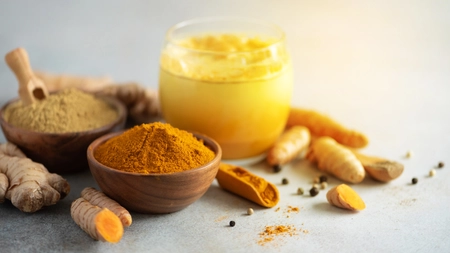
Recipe for Turmeric milk (Golden milk Recipe)
- Take 150 ml of warm milk in a glass.
- Add 1-5 gm of haridra churna (turmeric powder) to the milk.
- Mix the contents thoroughly.
- Consume while it’s warm.
Read more: Golden Milk Tea Recipe (Golden Milk Tea Benefits) | Golden Milk For Arthritis Recipe (Turmeric Milk For Arthritis) | How To Make Turmeric Milk For Joint Pain As Per Ayurveda
Haridra Lepa (paste) Application for Wounds/Headaches/Injuries
- Mix haridra churna (powder) with lukewarm water. Make sure it attains a paste-like consistency.
- Apply on the affected parts. (wound or injury)
- Let it dry completely.





Turmeric is good for our bodies and skin, so beauty products use it as an ingredient. Thank you for sharing how powerful turmeric is!
Absolutely agree! Turmeric truly lives up to its name as Ayurveda’s golden spice. Its natural anti-inflammatory and antioxidant properties make it a must-have for both internal and external healing. ✨
I’ve personally seen great results using it for skin clarity and boosting immunity — especially when combined with black pepper for better absorption. Ayurvedic wisdom is so powerful when applied consistently. Thanks for sharing this valuable insight!