

In a world increasingly conscious of health and well-being, every aspect of our daily lives comes under scrutiny, including how we store the most essential element of life – Water. Plastic bottles and dubious containers are losing favor due to concerns about their impact on water quality and our health.1 Wanting to embrace ancient wisdom, people are turning to Ayurveda, the age-old science of holistic wellness, which not only offers a safe way to store drinking water but also extols the virtues of preventing ailments through mindful practices.
Within the treasure trove of Ayurvedic knowledge lies a detailed guide on water’s characteristics, diverse sources, purification techniques, and preservation methods.2 Today let’s embark on a journey that uncovers the Ayurvedic wisdom on hydration and finding the perfect vessel for the storage of drinking water. Together we’ll explore Ayurvedic tips to stay hydrated and healthy in the most extreme and sweltering weather conditions.
So, get ready to drink from the fountain of Ayurvedic wisdom as we reveal the secrets of savoring water the right way!
Ayurveda’s Approach to Hydration
It’s a scorching summer day, and you’re feeling parched and sweaty. You reach for a glass of water, and as soon as it touches your lips, you feel an instant relief. Ah, water—the elixir of life!
In the world of ancient Ayurvedic wisdom, water is the superhero with incredible powers. Not just a liquid but a natural remedy that can do wonders for your body and mind. To put it simply, water is like a shot of energy. When you feel tired or sluggish, a sip of water can enliven you like a bolt of lightning. And when you’re feeling parched, nothing beats the refreshing feeling when water quenches your dry throat.
Moreover, water is extremely heart-friendly! It keeps you happy and healthy. It can be a real mood-lifter too. Ever felt down or stressed and then felt a sudden boost of positivity after drinking water? That’s the kind of magic at work, bringing a smile to your face and refreshing your mind.
Did you know?8 Drinking water first thing in the morning can detoxify your body, flush out toxins, enhance metabolism, combat constipation, and reduce appetite for breakfast.
The water you drink plays a significant role in your digestion and overall health! Ayurveda emphasizes mindful water intake practices to support balance in the body9:
- Boiled and Cooled Water: Ideal for pacifying Pitta dosha, which governs heat and digestion. This practice helps alleviate issues such as acid reflux, heartburn, and inflammation.
- Warm Water (Ushnodaka): Supports digestion, soothes a sore throat, and aids in relieving urinary troubles. It’s particularly helpful during colds or the flu.
- Hot Water: Enhances digestion and metabolism (Dipana), helps break down excess Kapha dosha (Kaphavicchedi), and ensures the smooth flow of Vata and Pitta doshas (Vatapittanuloman).
What do you think? Cold water vs Hot Water: Which is Better?
Incorporating the right type of water for your body’s needs can make a noticeable difference in your digestion and overall well-being.
And here’s the best part—water knows how to balance things out. Ayurveda teaches us that water can keep all three Doshas – Vata, Pitta, and Kapha – in check.3
We know now how crucial staying hydrated is for our well-being, and the fitness gurus keep reminding us to drink 2-3 liters of water every day. More water, more benefits, right?
Well, as per the ancient sages, there’s much more to this simple act of drinking water than what meets the eye…
How Much Water Should You Drink Per Day?
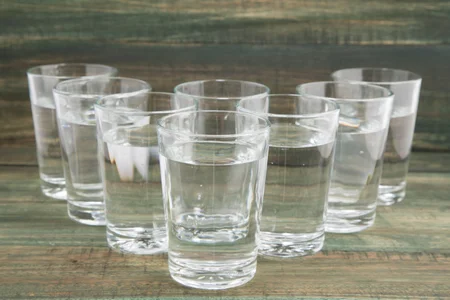
You’ve probably heard people saying, “Drink eight glasses of water a day!” but Ayurveda emphasizes that it doesn’t necessarily have to be one-size-fits-all. According to Ayurvedic principles, water should be consumed in moderation – not too much or too little. Insufficient water intake can lead to dehydration, while excessive consumption may result in indigestion (ajeerna).10
The amount of water you drink or need also depends on various factors, like where you live and how active you are. If you’re out in the sun all day or doing some hardcore workouts, you’ll need more water to stay hydrated and cool. But if you’re chilling in an air-conditioned room or just taking it easy, you might need less.
To elaborate, Ayurveda offers a different perspective & introduces the concept of ‘vega,’ or natural urges. In Ayurvedic principles, thirst is recognized as a natural urge. Accordingly, it suggests that individuals should only drink water when they genuinely feel thirsty. Ayurveda warns against excessive drinking of water, as it can disrupt the balance of doshas within the body. Even the tendency to drink excessively when thirsty is deemed inappropriate.11
Ayurveda’s secret is listening to your body – it knows what it needs. So, keep an eye on your thirst – it’s your body’s way of saying, “Hey, I need some water here!”3,4

Should You be Drinking Water During Meals?
Water and mealtime – a topic that stirs up so much debate! We’ve all heard that drinking water in between meals is a big no-no, right? Well, Ayurveda has more to say on the matter.
Sure, having a glass of water half an hour before a meal is a great idea. It gets our digestion ready for the feast ahead. But here’s the twist – drinking water in between meals can be a blessing! It aids in smooth digestion. Ayurveda calls it nectar for our bodies, like a refreshing sip that keeps us going.
The timing of your water intake can have a profound impact on your health and even your body weight10. As per Ashtanga Hridaya, ancient Ayurvedic text,
- Drinking water in between meals leads to good health and easy digestion.
- Drinking water at the end of a meal will lead to weight gain.
- Choosing to drink water before your meal will aid in weight loss (emaciation).
Having water right after finishing a meal is a big “no thanks” in Ayurveda’s book. It’s like serving a dose of poison for your digestion. Therefore, it is advised to wait an hour after meals and then have water.4
Are there any Interesting Recommendations on Water Intake as per Ayurveda? Read this blog to know more.
There’s another golden rule laid out by the wise sage, Acharya Charak – When you eat, remember to divide your stomach’s space in three parts. Half is for delicious solid food, a quarter for the liquids, and the remaining quarter, well, leave some breathing room for air. It’s all about striking that perfect food-water balance.5
So, next time you sit down to enjoy a meal, remember this Ayurvedic wisdom. Sip water between bites, give your stomach some space to work its magic, and let there be harmony between the composition of water and food!
What is the Right Temperature for Drinking Water?
Let’s talk about hot vs. cold water. Imagine you’re in the sweltering heat of summer, and you take a big gulp of ice-cold water – instant relief, right? Ayurveda gets it–cold water can be super refreshing, especially when it’s sizzling outside.
But when the weather gets chilly, like during winter, a cup of hot water can be your new best friend. It helps keep your body warm and supports your digestion, making you feel cozy and comfy inside.
- Cold Water: This is a great choice to cool off in the summer heat; it helps ease heat-related issues and detoxify the body. It can even help with fatigue, fainting, and sunstroke. However, remember to avoid it if you’re dealing with constipation, cataracts, fever, or after a heavy, fatty meal, as it can make fats harder to digest.
- Warm Water: This is perfect for supporting your digestion or soothing a sore throat and alleviating urinary issues. It’s especially beneficial during colds and flu or the winter season. However, avoid drinking warm water if you’re hungry, exhausted, suffering from asthma, or experiencing convulsions.
Ayurveda generally advocates drinking lukewarm or room-temperature water under normal conditions, as it is gentler on the digestive system and supports overall balance.3,4
Why Clay Pots are the Coolest Choice for Storing Water in Hot Summer!
We all love sipping on ice-cold water, especially during scorching summers. It’s become a habit to keep our water bottles chilling in the refrigerator, ready for instant refreshment. But did you know that Ayurveda advises otherwise?
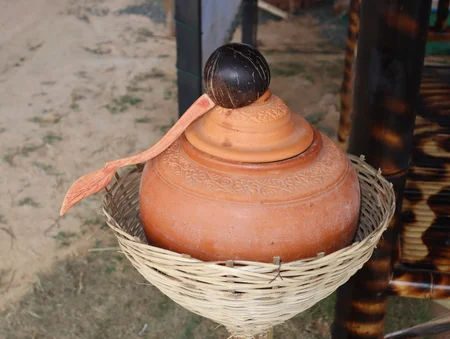
According to the ancient wisdom of the Samhitas, drinking extremely cold water, regardless of the season, isn’t the healthiest choice.
So, what’s the Ayurvedic alternative to keep our water cool and safe during those blazing hot days? Drumroll, please – it’s the humble Matka, also known as the earthen vessel or clay pot!
Mritta Patraaka Matka, the humble earthen pot, holds its own magic. It has a unique touch—it’s earthy and refreshing, like nature’s purest gift. It’s excellent at balancing your all seven dhatus (body tissues), boosting your immunity, and promoting vitality. It provides a natural detox and power boost both rolled into one, like drinking the essence of the earth itself!
Now, you might wonder why clay pots are the go-to choice in Ayurveda for storing water. Well, clay is a porous substance that allows both air and moisture to pass through. This makes it an incredible insulator, keeping our water cool without any harmful side effects.
When you keep water in a clay pot, it slowly seeps through the tiny openings in the clay, and as it evaporates, it cools down naturally. It’s like having a personal, eco-friendly air conditioner for your water!
Our well-being depends on the pH level of the water we drink. Plastic bottles and containers might alter the water’s pH due to the chemicals they contain. But clay has an alkaline nature that helps maintain the water’s pH stability. So, when you use a clay pot or Matka, you’re not only getting cool water but also water that’s good for your body.6,7
Qualities of Water Stored in Different Vessels
Ever wondered how the simple act of storing water in different vessels could impact its taste and effects on our body? Ayurveda, the ancient science of life, not only recognizes the significance of water but also offers profound insights into the qualities it acquires when kept in various containers. Drawing from the classic reference of Ayurveda Mahodadhi, let’s take a relatable journey into the fascinating world of water and the vessels that hold its secrets.7
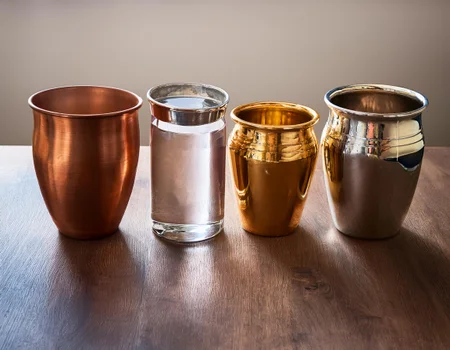
Water Stored in a Gold Vessel (Swarna Patra)
Imagine drinking water from a shiny gold vessel—it’s like sipping liquid gold! Water stored in such a vessel has a sweet taste that soothes your senses. This is even said to pacify all the three doshas in your body. Plus, it gives you strength and boosts your intellectual power.
Water Stored in a Silver Vessel (Rajat Patra)
Water stored in a silver vessel possesses a hint of astringent and sour taste – that’s the magic of silver! The water’s cold potency keeps you feeling cool and refreshed, perfect for hot summer days. It pacifies both Vata and Pitta doshas, strengthens your mind and body, enhances intellectual power, boosts longevity, and promotes overall health and well-being. Not to mention its aphrodisiac properties, adding a touch of romance to your life.
Water Stored in a Tin Vessel (Trapusha Patra)
Tin may not be as fancy as gold, but water stored in it has its own charm. It has a sweet aftertaste and a sticky consistency that makes you want to savour every drop. However, it can increase Kapha and bowel movements, so take it in moderation!
Water Stored in a Copper Vessel (Tamra Patra)
Copper is known for its warmth and healing properties, and water stored in a copper vessel reflects just that. It has a sweet and astringent taste, and a perfect balance of flavors. It helps boost your strength, reduce inflammation, and even treat anemia. It’s the ultimate immunity booster for those times when you need a little extra protection.
Learn More: 7 Simple Ways to Care for Copper Vessels
Water Stored in a Bronze Vessel (Ghosha Patra)
Bronze may be a bit heavy, but water stored in it has a spicy kick because of its pungent taste. Just be mindful, it can increase both Pitta and Kapha doshas.
Water Stored in a Brass Vessel (Reetika Patra)
Brass water has a zesty flavor — it’s both pungent and tangy, waking up your senses. It’s great at reducing Kapha and providing that warm feeling you crave during chilly days.
Water Stored in an Iron Vessel (Loha Patra)
Iron vessels exude strength, without a doubt, but may lead to imbalances. Water stored in loha patra might trigger bleeding disease, cause itching, and decrease jatharagini – the digestive fire. While iron is essential for our bodies, moderation is key when it comes to using it for water storage. So, better keep this vessel for other uses, like cooking!
Water Stored in a Ficus Tree Wood Vessel (Madhudambar Patra)
Ever tried water from a vessel made of fig tree wood? Imagine drinking water that’s considered the best for your body—like a sip of nature’s finest elixir. Ficus tree wood water improves your complexion and soothes the Pitta dosha.
So, there you have it—the full disclosure on the right way of hydration and guidelines for choosing a perfect water storage vessel! The next time you take a sip of water, let Ayurveda’s teachings guide you. Let’s bid farewell to plastic bottles and embrace the magic of traditional vessels, like the matka, that keep our water cool and pure without compromising our health.





0 Comments