

In today’s world, wellness has become a cherished treasure, and we often find ourselves searching for natural remedies that not only promote good health but also awaken our senses. Nestled within the ancient wisdom of ayurveda, lies an extraordinary gem that has captivated hearts for centuries – turmeric. The ‘Golden Spice’ is revered for its potent medicinal properties, and has cast its spell on countless cultures, transcending time and borders.
When it comes to the benefits of turmeric, this golden herb is truly an all-rounder in the Ayurvedic world. Turmeric has a long history of medicinal use in South Asia and has been incorporated into their spiritual life as a symbol of protection and purity.
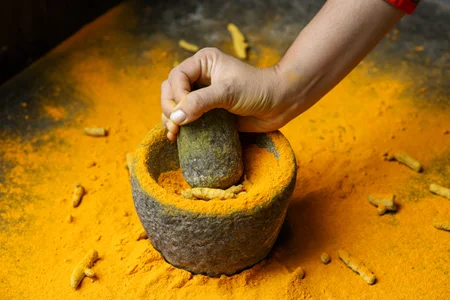
In India’s Vedic civilization, where it was used as a culinary spice and had some religious significance, turmeric has been utilized for approximately 4000 years. Throughout history, turmeric has been utilized in cuisine, cosmetics, and medicine. It is a common spice in Middle Eastern and South Asian cuisine. It lends curry its distinctive yellow color and flavor. In cheese, butter, and other foods, it serves as a coloring agent. It is a key component of most commercial curry powders. It is a common ingredient in Eastern delicacies like fresh turmeric pickles and is used in both savory and sweet recipes. Apart from lending its yellow color, there are numerous other, unknown benefits of turmeric. Get ready to fall head over heels for this golden spice!
Turmeric’s Effect on the Three Doshas
According to ayurveda, turmeric has a hot potency. Because of its hotness, it balances Vata and Kapha dosha, it is dry (rooksha) in nature and has a pungent (katu) and bitter (tikta) taste. Because of this, it balances Kapha and Pitta. Therefore, consuming turmeric balances all three doshas. It treats disorders of Kapha, Vata, blood, and skin. It keeps a check on urinary diseases, pruritus, wounds and imparts an amazing golden complexion to the skin.
Turmeric as a Traditional Medicine
Turmeric1,2 is said to provide a variety of medical benefits in ayurvedic traditions, including boosting bodily energy, reducing gas, getting rid of worms, enhancing digestion, controlling menstruation, removing gallstones, and alleviating arthritis. It is employed as an antibacterial agent and an antiseptic for cuts, burns, and bruises, in several South Asian nations. This golden spice is also used as an anti-inflammatory and as a treatment for digestive illnesses including irritable bowel syndrome that cause stomach pain.
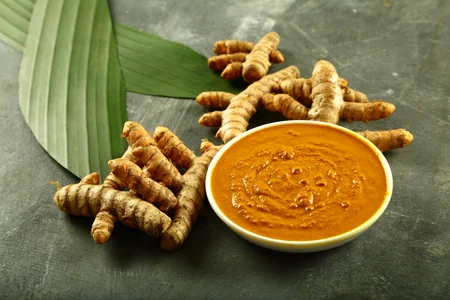
Turmeric has a long history of use in ayurvedic medicine as a remedy for several respiratory ailments, including asthma, allergies, and bronchial hyperactivity, as well as for liver problems, anorexia, rheumatism, diabetic wounds, runny noses, coughs, and sinusitis. It is also used in traditional Chinese medicine to treat illnesses linked to stomach pain. Turmeric has long been used to treat sprains and swelling as advised by Ayurveda. The benefits of turmeric don’t just stop there! Unani practitioners administer turmeric to open blood vessels, enhance blood circulation, and eliminate phlegm or kapha. To enhance digestion and lessen gas and bloating, it can be added to foods like rice and bean dishes. It is also occasionally used to treat digestive issues and common cold and sore throats by combining it with milk or water.
Benefits of Turmeric in Diet
From birth to burial, a variety of traditional occasions have employed turmeric. It is revered as holy, auspicious, and a sign of good fortune.
In India, turmeric is used as a blood purifier and is added to every vegetable and pulse dish prepared in the kitchen. Can you imagine?
When you have injuries or have been in an accident, it is also believed to heal the body from the inside out. Applying turmeric powder helps to prevent bacterial and fungal diseases.
Adult Indians are thought to take between 80 and 200 milligrams of curcumin (turmeric) daily. The spice provides the food taste and a lovely golden hue. The turmeric’s active ingredient, curcumin, is hydrophobic but soluble in oil. Due to its solubility in oil, turmeric would be easier to digest when cooked.
Dry Vs Wet Turmeric
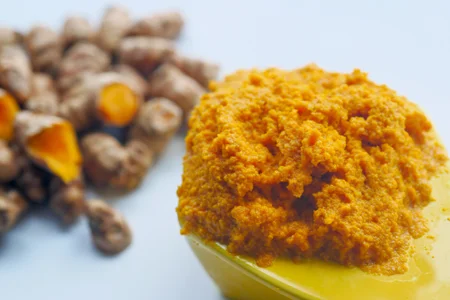
Wet turmeric contains a lot of moisture. Due to the moisture present, the phyto-chemicals and medicinal components are dispersed over a larger surface area. Because of the less dense active ingredients, moist turmeric is simpler to digest and absorb. Raw turmeric juice is applied as a paste to the skin, left on for about 30 minutes, and then washed off. This adds glow to the skin. On the other hand, there is no moisture in dry turmeric. According to a notion, the heat used to dry the turmeric results in the loss of certain chemical compounds. The loss of nutrients is small when turmeric is heated and dried, despite some loss being unavoidable. However, dry turmeric is a little bit more difficult to digest due to the weight of these phyto-chemicals. Because of this, it can be used more frequently in the creation of medicines and remedies and less frequently in cooking. 4
Home Remedies Using Turmeric
- Anemia- Take a dose of 1 tsp of turmeric juice mixed with honey every day.
- Asthma- Boil 1 cup of milk with 1 tsp of turmeric powder to make a drink.
- Burns- Mix 1 tsp of turmeric and 1 tsp of aloe gel together and apply to the burnt area.
- Conjunctivitis- Mix 1 tbsp of crushed and raw turmeric with 1/3 cup of water. Boil it and sieve. Use 2–3 drops of this mixture in each eye up to 3 times a day.
- Complexion- Apply a paste of turmeric on the skin before going to bed and wash it off after a few minutes. Any lingering yellow tint should be removed in the morning using a paste made of oil and chickpea flour (besan)3.
- Dental problems- Mix 1 tsp of turmeric with ½ tsp of salt and add mustard oil to make a paste. Turmeric contains fluoride, which is crucial for healthy teeth. Brush your teeth and gums with this paste twice daily.
- Diabetes- for diabetes, take ½ – 1 tsp of turmeric thrice a day.
- Diarrhea- Mix ½ tsp of turmeric powder in water and consume thrice a day.
- Pain- Make a paste by combining 1 teaspoon of turmeric and 2 teaspoons of ginger with water. Alternatively, mix 1 cup of warm milk with 1 teaspoon of turmeric and consume before bedtime. Spread over a cloth, apply it over the affected region, and bandage.2

9 Reasons to Love Turmeric
Use of Turmeric for Diabetes
Ayurveda believes that turmeric is a very effective herb when it comes to treating diabetes. It may help in lowering the blood glucose levels in our body.5 Heart’s best friend: Turmeric’s anti-atherosclerotic properties. Due to its dryness, heated intensity, and bitter-pungent taste (rasa), turmeric clears obstructions in the blood vessels, facilitating easy blood and nutrient circulation.
The main cause of atherosclerosis is accumulations in blood arteries, which are nothing more than vitiated Kapha-meda. Turmeric also breaks down the circulating glucose, and because of its anti-inflammatory properties, it makes it easier for cells to absorb free glucose because of its channel cleansing property (Srotoshodhana). This further helps to keep your blood pressure, cholesterol and heart’s health in check.
Turmeric Benefits for Allergic Rhinitis
- Use in diet – Increase your intake of turmeric in your diet to treat allergic rhinitis. It can be added to gravies, rasam, and other dishes. The greatest method to prevent allergy reactions from developing is to make taking turmeric in your diet a habit.
- Turmeric with hot milk – You can even reap the benefits of turmeric by adding a small amount of turmeric to a cup of boiling milk. On an empty stomach, consume this in the morning. You can mix a pinch of milk with water if you have a milk allergy.
- Turmeric with ghee – Combine two pinches of turmeric with four teaspoons of ghee. Apply this ghee-turmeric combination in a very thin coating right before leaving your house.
Hot pan technique – Applying a little spoonful of turmeric powder to a hot skillet and inhaling the vapors is known as the “hot pan technique.” This aids in lowering upper respiratory tract irritation.
Turmeric for Immune-modulation Action
Due to its antioxidant properties, turmeric aids in immune modulation action by regulating metabolism, and allowing free passage of nutrients and oxygen to every cell. Due to correct feeding and replenishment of all tissues, immunity is established and the essence of all tissues, or ojas, regains its vigor.
Turmeric’s Ability to Detox
The obstructions in the cells are removed by turmeric, which also restores the normal operation of the cells. Following the removal of the blockages inside the cells, there is a smooth circulation of nutrients into the cells and the removal of toxins from the cells.
Turmeric for Liver Function Regulation (Anemia)
Turmeric aids in the clearance of obstructions from the liver and returns the hematological processes to normal. No matter how turmeric is consumed, it is beneficial to the liver and the overall digestive system.
Happy Joints, Happy Life
Many calcium tablets now contain Curcuma longa (turmeric) as well. People with conditions like arthritis, osteoporosis, weak bones, low bone density, porous bones, degenerative joint problems, etc. are typically advised to take calcium supplements. There is a lot of inflammation linked to these disorders. As a result, adding turmeric to the mixture helps enhance its beneficial anti-inflammatory and wound-healing properties. Turmeric can help to lessen the pain and swelling, brought on by osteoarthritis and brittle bones.
Turmeric for Cancer Prevention
A recent study demonstrated that administering curcumin in a dose-dependent manner efficiently stimulated the degeneration of liver cancer cells and may have potential for prevention of cancer6.
Benefits of Turmeric for Skin
It is time to infuse your lives with a radiant glow. The golden spice, turmeric, has several benefits for women’s health. Applying turmeric to the face reduces acne and enhances the bloom and radiance of the skin. Additionally, taking turmeric orally is a great way to detoxify the blood and improve the health of your skin.
Read More: Turmeric: Ayurveda’s Golden Spice for Skin, Immunity, and Healing
Turmeric for Menstrual Cramps
Turmeric has anti-inflammatory and anti-spasmodic properties. A small amount of turmeric can help reduce period cramps in addition to promoting menstrual health. Additionally, it helps alleviate depression and controls the brain’s levels of dopamine and serotonin.
How to take Turmeric Daily?
To balance Vata dosha in adults, take 2 pinches (1 g) of turmeric every day along with a half teaspoon of ghee (clarified butter). Turmeric can tolerate heat. Therefore, it is okay to use it to prepare herbal tea or to add it to a standard beverage like coffee, tea, or milk. Add a dash of turmeric powder to whatever you are eating to reap its advantages. People with a Pitta-dominant constitution may occasionally feel their body heat rise when using turmeric. Mixing a small amount of turmeric into a cup of milk will counteract turmeric’s excessive heat.
Conclusion
India has long used turmeric as a vibrant, flavorful condiment and as an ayurvedic medication to cure dyspepsia, gallstones, etc. It has also been employed to increase appetite and function as a carminative. The power of turmeric lies not only in its vibrant hue but also in the ancient wisdom it carries. From its potent anti-inflammatory properties to its ability to support healthy digestion and promote radiant skin, the benefits of turmeric are never-ending; it has shown us time and again why it holds a special place in ayurvedic traditions. It might even close some of the numerous gaps that allopathic medicine has failed to address. As this ancient practice is being brought to the West, it is crucial to have a cultural understanding of its roots, allowing it to nurture your body, mind, and spirit.
Read More: Finding Your Satmya: The Ayurvedic Diet And Lifestyle That Works Best For You





0 Comments