

Many people find bitter foods or the bitter taste unappealing, but they offer remarkable health benefits. These include cleansing toxins, balancing doshas, aiding digestion, and improving metabolism. Found in ingredients like bitter melon, neem, dandelion, and turmeric, tikta rasa (Bitter taste) is essential for overall well-being.

In this guide, you’ll discover why tikta rasa is considered nature’s detoxifier as per Ayurveda and how to incorporate it into your diet for maximum benefits.
Bitter Taste in Ayurveda
Ayurveda identifies six primary tastes – sweet, sour, salty, pungent, bitter, and astringent. Each taste has its own uniqueness and properties by which each taste/rasa shows different effects on the body. Ayurveda, the ancient science of medicine, proves the evident and very crucial role of shadrasa or six tastes in your daily diet. It elaborates the importance of understanding the healthy relationship between your body, mind, environment, and the food you eat.
Tikta rasa or bitter taste is characterized by the weakening of taste perception of the tongue. It is the fifth rasa in the list of shadarasa, which is associated with ruksha (dry), sheet (cold), and laghu (light) properties.
With reference to Charaka Samhita, Sutrasthana chapter 26, tikta rasa is described as “aruchiruchikaranam,”. This means that it is the only rasa that is tasteless but also cures anorexia (loss of appetite). It is a potent rasa that not only purifies but also helps to remove excess heat, mucus, and toxins from the body.
Composition of Bitter Taste
Tikta rasa or bitter taste is composed of two elements, i.e., akash (ether) and vayu (air). Considering these two fundamental elements, we can imagine the properties of bitter food as lightness, hollowness, coldness, and dryness. These properties match maximum traits of Vata dosha; therefore, it elevates it. Being totally opposite to the traits of Kapha dosha, it pacifies it.
Health Benefits of Bitter Taste in Ayurveda
Tikta rasa or bitter taste reflects numerous health benefits, including:
- Astringent effect: The astringent properties of tikta rasa help in enhancing tissue tone and firmness throughout the body. This effect contributes to reducing excess mucus, minimizing swelling, and alleviating inflammation. It is also useful for individuals with oily skin, as it helps to reduce oiliness on the skin and promotes a clear and flawless complexion.
- Digestive aid: Bitter taste plays a vital role in digestion by stimulating the production of digestive enzymes, enhancing nutrient absorption, and helping to maintain a balanced acid-alkaline level in the stomach. Since a well-functioning digestive system is the key to a healthy and harmonious body, incorporating tikta rasa into your daily diet is essential to reaping its numerous benefits.
- Detoxifying and purifying: Tikta rasa is famous for its detoxifying properties. It stimulates the liver, an organ responsible for filtering toxins from the body. It also promotes better bile production, which eventually assists in improved digestion and absorption of nutrients. Therefore, we generally use bitter herbs in various detoxification programs.
Read more: 10 Detox Foods To Boost Your Health

Ayurvedic Properties of Bitter Taste
- Laghu (Lightness): The involvement of the air element makes it the light rasa, which helps to manage various Kaphaja disorders such as obesity.
Ruksha (Dryness): The combination of ether (akash) and air (vayu) elements makes it a dry rasa. This helps to manage excess moisture (snigdha) in the body.
Sheet (Cold): Since it is composed of the air (Vayu) element of panch mahabhoot, it makes tikta rasa cold in potency and a useful rasa to manage issues related to aggravated Pitta, for example, hyperacidity.
Therapeutic & Medicinal Uses
- Obesity management: Tikta rasa dravyas (substances with bitter taste or tikta rasa) are highly useful in medoroga (obesity). Meda and Kapha share the same panchbhautik composition. As such, when a person consumes a kapha vardhak diet, his meda gets elevated, which eventually obstructs the channels, leading to poor or improper nutrition. Tikta rasa being ruksha and laghu absorbs the Kapha and meda. The akash element of tikta rasa provides space, i.e., it cleans the channels, restores nutrition, and removes obesity.
- Diabetes management: For the reasons mentioned above, tikta rasa dravyas are equally beneficial in diabetes and other related conditions that arise due to impaired agni caused by obstruction in bodily channels.
- Amlapitta or hyperacidity management: In amlapitta, the dravatva (liquid) component of Pitta increases, weakening agni (digestive fire) and causing Pitta vidagdha (aggravated Pitta). This excess Pitta, being sour in nature, leads to its regurgitation into the oral cavity. Tikta rasa, known for its shoshak (absorptive) properties, helps absorb the excess liquid Pitta, restores agni, and ultimately helps alleviates amlapitta.
- Jwara or fever management: The very basic and foremost reason for fever is the accumulation of ama, leading to weakness during fever. Tikta rasa not only ignites the digestive fire but also helps vanish ama and improves overall health.
- Kushtha or psoriasis management: As kushtha is a tridoshaja vikara (disorders or imbalances caused by the aggravation of all three doshas – Vata, Pitta, and Kapha – simultaneously) which involves rakta dushti (when blood is affected by impurities and imbalances). Tikta rasa dravyas are used here to pacify Pitta & Kapha dosha and are also a good blood purifier, so it improves rakta dushtias well.
How to Incorporate Bitter Taste in Your Diet
If you’re new to bitter foods, it will take some time to get used to them. However, here are a few easy ways to introduce these into your daily routine:
- Bitter herbal teas: Herbal teas made from herbs with bitter tastes like neem, dandelion, or turmeric can be a good way to start incorporating tikta rasa into your diet. It will help promote digestion as well as detoxification.
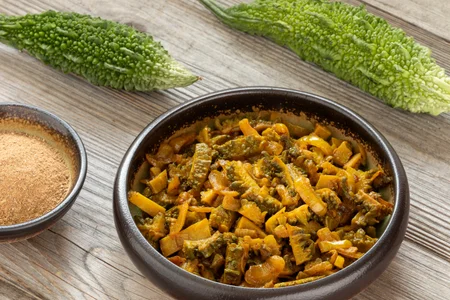
- Add bitter greens to your meals: Incorporate bitter greens like bitter gourd, kale, dandelion leaves, or arugula into your salads. You can also add some salt and pepper as sprinklers to add taste and combat bitterness.
- Juices: Juicing bitter vegetables like bitter melon or cucumbers will help you consume bitter edibles easily. You can also add sweeteners (in limit) or some sweet fruits to add taste to your juices.
- Bitter spices: Add turmeric, ginger, fenugreek, and other bitter spices to your cooking habits. This will help get the benefits of tikta rasa every day.
Conclusion
Tikta rasa, or the bitter taste, is more than just a strong flavor. It is a powerful Ayurvedic element that supports digestion, enhances digestive fire, aids detoxification, and contributes to overall well-being. Its unique composition gives it cooling, astringent, and purifying properties, making it essential in samprapti vighatana (the process of disease reversal) to help address various health concerns. While incorporating bitter foods into your diet may feel challenging at first, regular consumption can unlock their remarkable healing potential. Over time, tikta rasa can help promote a healthy digestive system, clearer skin, a toned body, and overall physical and mental well-being.


0 Comments