

Bipolar disorder treatment has become increasingly important in recent years as awareness around mental health grows. Did you know, bipolar disorder affects approximately 5.7 million American adults, representing around 2.6% of the population over the age of eighteen.
Bipolar disorder, also referred to as manic-depressive illness, is a neurological condition that leads to distinct and often extreme fluctuations in mood, energy, activity levels, and the ability to carry out day-to-day routine.
Types of Bipolar Disorder
There are four basic types of bipolar disorder; all of them involve clear and marked changes in mood, energy, and activity levels.
- Less severe manic periods are known as hypo-manic episodes.
- Bipolar I disorder is characterized by one or more manic episodes, often with or without accompanying depressive episodes.
- Bipolar II disorder involves at least one hypomanic episode and one or more major depressive episodes, but no full manic episodes.
- Cyclothymic disorder describes a pattern of chronic mood fluctuations, including periods of hypomania and depressive symptoms that do not meet the criteria for major depressive episodes.
When the episodes do not fall into the previous three subcategories, the term Bipolar Disorder NOS (Not Otherwise Specified) is used and defined as: “A catchall category, diagnosed when the disorder does not fall within a specific sub type.”

Ayurveda’s Definition of Bipolar
Traditional Ayurvedic texts like those of Charaka and Sushruta do not contain a specific term equivalent to bipolar disorder. Instead, the broad term “Unmada” is used to describe various forms of mental imbalance or insanity. According to modern practitioners of Ayurveda, bipolar disorder is described as a lack of stability or ojas, which leads to difficulty sustaining emotional responses, low sattva guna (peaceful quality of mind), and high Vata.
Ojas, in Ayurveda, is supposed to “maintain immunity, strength, integrity, and vitality.” An excess of Vata in the mind may express itself as fear, anxiety, detachment, restlessness, insomnia, tremors, palpitations, and volatile mood swings. From an Ayurvedic standpoint, manic-depressive states or schizophrenia are seen as severe Vata imbalances in the mind and nervous system.
Triggers of Bipolar Disorder as per Ayurveda
According to Ayurveda, fluctuations in emotional states are brought on by Vata-provoking qualities in the individual’s lifestyle, habits, foods and activities. Addressing these Vata imbalances through diet, routine, and herbal support is considered a foundational approach in Ayurvedic bipolar disorder treatment.
Some specific causes include:
- Eating in a state of emotional distress ( anxiety, sadness, and anger)
- Eating while performing other activities (multitasking)
- Taking in stimulants such as coffee or cigarettes
- Using intoxicants such as alcohol or recreational drugs
- Following irregular routines with no stability
- Traveling frequently
- Late sleeping habits
- Exposure to excessive loud music or noise
- Engaging in excessive physical or sexual activity
- Ignoring seasonal lifestyle adjustments, especially during autumn
- Overdependency on TV, mass media, social media
- Suppressing inner creativity and emotional sensitivity
Drawbacks of Modern Medicines
The mood stabilizers, antidepressants, and antipsychotics are remarkable innovations of modern medicine. They have a profound impact on brain chemistry and are often highly effective in managing symptoms and enhancing the quality of life for individuals undergoing bipolar disorder treatment.
However, from an Ayurvedic perspective, these medications do not address the underlying doshic imbalances—the root causes of the disorder. Instead, they function primarily by suppressing or regulating the outwardly manifesting symptoms.
Role of Samana Vata in Bipolar Disorder Treatment
In the mind, Samana Vayu is responsible for regulating and harmonizing the other Vayus (subtypes of Vata).
When balanced, it fosters mental equilibrium. When disturbed, thoughts and emotions become chaotic. Samana vayu is also responsible for absorbing sensory impressions into the workings of the brain and mind.
Vyana vayu is also responsible for movement in the nervous system and circulation of thoughts and emotions. Aggravated Pitta pushed by Vata leads to the mental principle of rajas, which may result in mania.
Ayurvedic Treatment for Bipolar Disorder
Ayurvedic treatment focuses on three main pillars:
Increasing Ojas
Eating a diet rich in ojas-increasing foods is a great way to promote healthy ojas in the body.
Here is a list of some powerful ojas building food choices:
- Ghee
- Dates
- Almonds
- Cashews
- Pumpkin seeds
- Sesame seeds
- Avocado
- Healthy oils such as coconut, olive, sesame and almond
- Coconut meat, coconut water, coconut milk
Another method to rebuild and increase your ojas is deep breathing. As mentioned before, constriction is a leading cause of depleted ojas. Therefore, taking the time to take some deep breaths each day is an excellent and efficient way to increase our ojas and our vitality. Each morning, take a comfortable seat and take 10 deep belly breaths making them long, smooth and steady.
Increasing Sattva Guna
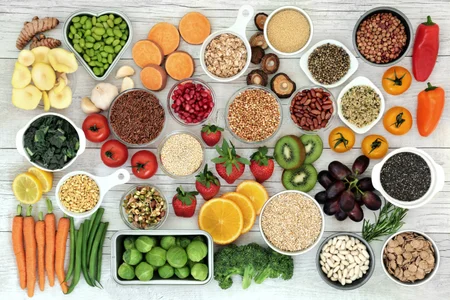
Choose sattvic foods—light, fresh, and pure—to increase clarity and calmness of mind. These include:
Fresh vegetables, milk, fruits, most grains, split or whole mung dal and almonds. These increase calmness, clarity and creativity of the mind—in other words, they enhance sattva.
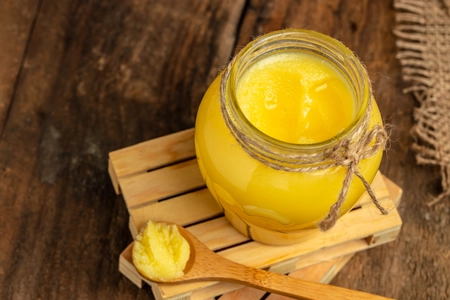
Use ghee as a medium of cooking. Ghee is clarified butter, free of milk solids, proteins and water. It has amazing nutritive and medicinal qualities, besides being extremely flavorful and aromatic. Its penetrative qualities make it an excellent medium for aiding the absorption of nutrients by the body, while also lubricating the tissues.
Avoid refrigerated, processed, artificially colored, canned and chemically preserved foods as far as you can. They increase ama, or toxic undigested matter in the physiology, tax the body’s agni or digestive fire, lack vitality, and do not stimulate your sattva.
Stabilizing Vata Dosha
To keep Vata in balance, favor the sweet, sour and salty tastes and avoid bitter, pungent and astringent foods.
Key Guidelines:
- Eat larger quantities, but don’t overeat. This helps to balance the lightness of Vata.
- Take sweeteners in moderation. They all help to pacify Vata.
- Fats and oils are beneficial in the digestive system and help reduce Vata. Use up to three teaspoons daily of ghee or extra virgin olive oil.
- All low-fat dairy products are recommended. Milk is easier to digest when warm or heated.
- Use spices that pacify Vata including cardamom, cumin, ginger, cinnamon, salt, cloves, mustard seed, basil, asafetida, cilantro, fennel, oregano, sage, tarragon, thyme, and black pepper.
- Rice and wheat are the best grains for balancing Vata. Reduce the amount of barley, corn, white flour, and rye that you consume.
- Favor sweet, heavy fruits such as bananas, avocados, mangoes, apricots, plums, berries, coconut, figs, grapefruit, oranges, lemons, melons, papaya, peaches, pineapples, kiwi, dates, nectarines, and dried fruits.
- Cooked vegetables are best. Raw vegetables should be minimized. Favor Asparagus, beets, and carrots. Other vegetables may be taken in moderation if cooked in ghee or sesame oil, including peas, broccoli, cauliflower, zucchini, and sweet potatoes. Sprouts and cabbage tend to produce gas and should be minimized.
- Dairy products pacify Vata. For optimal digestion, boil milk before drinking it and consume it while warm.
- All varieties of nuts are recommended.
- Beans can aggravate Vata. Minimize your consumption of beans, with the exception of mung bean dal.
- For non-vegetarians, use fresh, organic chicken, turkey, seafood, and eggs.
Read More: How Your Vata & Pitta Doshas Are Connected To Autoimmune Diseases





0 Comments