

In the lush landscape of Ayurvedic herbs, there exists a treasure full of botanical and medicinal wonders, each possessing its own unique story of healing and rejuvenation. Among these sacred plants, Bakuchi emerges as a radiant yet underrated herb, revered for its myriads of therapeutic virtues and time-honored wisdom. Not known to many, Bakuchi benefits has been cherished for centuries for its profound impact on skin health and beyond. But Bakuchi’s significance extends far beyond its cosmetic allure; deeply rooted in Ayurvedic wisdom, it embodies the holistic principles of balance and harmony. Together, let us explore the timeless wisdom of Bakuchi (as mentioned in Ayurveda) and its lesser-known miraculous benefits. Happy reading to you!
Name of Bakuchi in different languages
English – Psoralea seeds or Psoralea corylifolia
Hindi – Bavachi
Sanskrit – Bakuchi (बाकुची)
Bakuchi as described in ancient Ayurvedic texts (Shloka verse)
अवल्गुजो बाकुची स्यात्सोमराजी सुपर्णिका । शशिलेखा कृष्णफला सोमा पूतिफलीति च ॥ २०६ ॥
सोमवल्ली कालमेषी कुष्ठघ्नी च प्रकीर्त्तिता । बाकुची मधुरा तिक्ता कटुपाका रसायनी ॥ विष्टम्भहृद्धिमा रुच्या सरा श्लेष्मास्त्रपित्तनुत् । रूक्षा हृद्या श्वासकुष्ठमेहज्वरकृमिप्रणुत् ॥ २०८ ॥
तत्फलं पित्तलं कुष्ठकफानिलहरं कटु । केश्यं त्वच्यकृ’ मिश्वासकासशोथामपाण्डुनुत् ।।२०९॥
Bhavaprakasha Nighantu- Haritkyadi varga– page no. 119 and shloka no. 206-208
सूषायवानीकर्कारुक्षीरिणीचिर्भटस्य वा । उपोदकाया जीवन्त्या बाकुच्या वास्तुकस्य वा ॥ २१ ॥
Ashtanga Hridaya – Chikitsa Sthana – 9th chapter – page no. 337 and shloka no.21
विडङ्गभल्लातकबाकुचीनां सद्वीपिवाराहिहरीतकीनाम् । सलाङ्गलीकृष्णतिलोपकुल्या गुडेन पिण्डी विनिहन्ति कुष्ठम् ॥ ४५ ॥
Ashtanga Hridaya – Chikitsa Sthana – 19/45-page no. 480
रसायनप्रयोगेण तुवरास्थीनि शीलयेत् । भल्लातकं बाकुचिकां वह्निमूलं शिलाह्वयम् ॥ ५३ ॥
Ashtanga Hridaya – Chikitsa Sthana –19/53 page no. 481
पारावतपदीदम्तीबाकुचीकेशराह्वयैः ॥ कण्टकार्या च तत्पक्कं घृतं कुष्ठिषु योजयेत् ॥ ३२ ॥
Sushruta Samhita – Chikitsa Sthana – 9th chapter, page no. 445, and shloka no.32
सिद्धं धान्याम्लसंयुक्तं तैलमुत्पातनाशनम् ॥ १७ ॥ तालपत्र्यश्वगन्धार्कबाकुचीफलसैन्धवैः ॥
Sushruta Samhita – Chikitsa Sthana – 25th chapter, page no. 415, and shloka no.18
Appearance of Bakuchi Plant
Bakuchi is an upright herb that is cultivated yearly with branches and a stem that has grooves, up to a height of 4 to 5 feet. It is covered with white hair and glands. Bakuchi has spherical and mucronate leaves (short pointing and abruptly ending leaves) that have five nerves emerging from the base. Solitary axillary racemes containing 10–30 flowers make up the inflorescence. The color of the blossoms is bluish-purple. The fruit is a black, glabrous, beaked pod that is 5 mm long. The seeds are surrounded by a sticky oily pericarp that contains psoralen.

Ayurvedic properties of Bakuchi
Rasa (Taste): Bakuchi has 2 flavors, katu (pungent) and tikta (bitter), which contribute to its flavor profile.
Guna (Quality): Bakuchi has 2 primary qualities laghu (light) and ruksha (dry).
Veerya (Potency): Bakuchi has an ushna (hot) potency, indicating a heating effect on the body.
Vipaka (Taste developed through digestion): Post digestion Bakuchi retains its katu (pungent) taste.
Main Actions & Bakuchi Benefits
In addition to its taste and potency, Bakuchi is renowned for its prabhava, or unique action, which is said to be particularly effective in promoting skin health and supporting the body’s natural healing processes. This makes Bakuchi a cornerstone of Ayurvedic skincare formulations, revered for its ability to address a wide range of dermatological concerns. Here are some of the main Bakuchi benefits for the body, as per Ayurveda!
Rasayana (Rejuvenator) – Bakuchi acts like a rejuvenator. It helps nourish and replenish all tissues.
Ruchya (Boosts appetite) – Bakuchi helps to boost the appetite.
Medhya (Brain Functioning) – Bakuchi can support brain health and cognitive functioning by demonstrating its qualities that enhance cognition.
Most Commonly Used Parts of Bakuchi
Bakuchi Seeds, leaves, and roots are the most widely used part of the herb.

Medicinal Uses of Bakuchi Plant
Switra (Leucoderma)
क्वाथोऽवल्गुजचूर्णादयो धात्रीखदिरसारयोः । जयेत् मुशीलितो तित्यं श्वित्रं पथ्याशिनां नृणाम् ॥
(शा.स. 2.2/137)
In case of shvitra (vitiligo), decoction prepared from Bakuchi (Psoralea corylifolia), Dhatri (Phyllanthus emblica) and Khadira sara (Heartwood of Acacia catechu) must be prepared and administered to the patient.
Note: Patients should be on a conducive diet.
Kustha (Skin diseases)
सोमराजीभवं चूर्ण शृङ्गवेर समन्वितम् । उद्वर्तनमिदं हन्ति कुष्ठमुग्रं कृतास्पदम् ॥
(भा.प्र.चि. 54/53)
Udwarthana – Dry powder massage can be done with bakuchi and ginger, in cases of severe skin diseases.
Bakuchi benefits and focuses primarily on skin diseases. It is beneficial in treating vitiligo. Vamana and raktamokshana (bloodletting) should be done first, followed by the administration of a decoction prepared with bakuchi and jaggery. To get rid of vitiligo, dietary limits should be followed. Khadira decoction should be taken along with Bakuchi1.
Pravahika (Enteritis)
सुवर्चलायाश्चञ्चोर्वा शाकेनावल्गुजस्य वा । दधि दाडिमसिद्धेन बहुस्नेहेव भोजयेत् ॥
(च.चि. 19/33)
As one of the treatments for enteritis, Ayurveda mentions the usage of leaves of Bakuchi and its benefits. It should be processed with curd and dadima (pomegranate). This must be consumed with rice, by adding sufficient quantity of ghee in it.
Respiratory Diseases
Bakuchi is also utilized in relation to respiratory health. The buildup of mucus or phlegm in the lungs and respiratory passageways is caused by bakuchi oil. In addition to relieving sinusitis, bronchitis, headaches, whooping cough, breathing problems, asthma, and chronic fever, it also helps to relieve nasal congestion. Its Ushna, Virya, Kapha balance, and rasayana (rejuvenation) qualities help handle these disorders2.
Jaundice
Bakuchi benefits include actions like deepan (appetizer) and rasayana (rejuvenation) which are extremely helpful in jaundice. It strengthens appetite, facilitates better digestion, and preserves general health3.
Hair growth
As per Ayurveda bakuchi removes dandruff and increases hair growth when applied externally because of its keshya properties. It also improves the quality and luster of hair. It is also beneficial for grey hair4.
Worm infestation
It helps treat worm infestation; as per Ayurveda, it exhibits krimighna (anti-worm) properties.
Bakuchi’s Effect on the Three Doshas
Vata Dosha – Bakuchi is believed to have a calming effect on the Vata dosha due to its warming and grounding properties.
Pitta Dosha – Bakuchi also ensures the balance of Pitta dosha. Bile regulates digestion and metabolism and bakuchi maintains the proper functioning of bile, including the digestive fire.
Kapha Dosha – Bakuchi can have a stimulating effect on Kapha dosha. Kapha governs the structure and stability of the body and is associated with factors such as weight and cold.

Bakuchi Oil vs Bakuchiol – What’s the difference?
Bakuchi oil is derived from the cold-pressing of babchi seeds, extracted from the Psoralea corylifolia plant. It’s important not to confuse bakuchi oil with bakuchiol, a pure chemical compound isolated through a different process from the same plant. While bakuchi oil does contain bakuchiol, it’s in a very small amount.
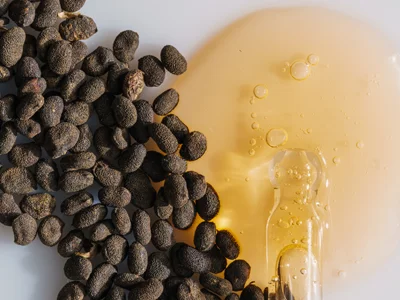
Bakuchi oil is deemed one of the most efficient natural remedies for skin issues. It can calm inflammation effectively when mixed with coconut oil and applied to the skin. This powerful oil also aids in healing boils and skin eruptions.
Not just for the skin, bakuchi oil can help clear up phlegm and mucus in the lungs & respiratory passages, providing relief from chronic fever, nasal congestion, colds, bronchitis, headaches, whooping cough, breathing difficulties & sinusitis. Plus, it rejuvenates the entire body! It’s crucial to exercise caution when using bakuchi oil. Always dilute it before application, do a patch test, and seek guidance from an Ayurvedic expert. Additionally, after applying the oil, remember to use sunscreen to prevent sensitivity to UV rays to avoid sunburn.
On the other hand, Bakuchiol is a substance found in seeds & leaves of Psoralea corylifolia (Bakuchi). In the world of skincare, bakuchiol is the gentler, friendlier version of retinol. It acts and works like retinol, a common ingredient in skincare products. It works its magic by regulating gene expression, just like retinol does. When you apply bakuchiol, get ready for some serious skin benefits. It helps prevent wrinkles, even out pigmentation, boost elasticity, and firm up your skin. Plus, it’s a pro at repairing photodamage caused by the sun. It also has anti-inflammatory & anti-microbial properties. However, make sure you use tons of sunscreen after applying it!
Read more: About The Miracle Ingredient Bakuchiol For Ageless Skin
Precautions and Side Effects of Bakuchi
Pregnant and breastfeeding women – There are not many conclusive studies suggesting the effects of bakuchi on pregnant and breastfeeding women therefore it is advised to consume under the guidance of a medical professional.
Allergic reaction – Individuals who are allergic to bakuchi should avoid its consumption.
Who Can Benefit From the Consumption of Bakuchi?
- Individuals with Jaundice
- Individuals managing worm infestation
- Individuals who want to improve their hair growth
- Individuals wanting to improve respiratory health
How to Consume Bakuchi?
Bakuchi Churna
It can be consumed with honey; Take ¼-½ teaspoon bakuchi churna and add 1 tsp of honey. It should be consumed post-lunch or dinner.
Bakuchi Capsule
Take 1-2 bakuchi capsules and swallow them with water after lunch and dinner.
Precautions to be Taken While Consuming Bakuchi
There are no specific precautions one must take while consuming bakuchi apart from excess consumption which might have adverse effects. Apart from this, proper shodhana (purification procedure) of bakuchi must be done, for improved outcomes. This can be done by immersing bakuchi seeds in cow’s urine and then filtering it using a cotton cloth the next day. Pregnant and breastfeeding women must consume it, based on the advice of a medical professional.




0 Comments