

Jaljeera lemonade or Jal Jeera is a favorite Indian beverage similar to lemonade with the addition of cumin and black salt. It is quite popular during the warmer summer months. Below is some detailed information on Jaljeera’s main ingredients with their individual benefits and actions. Also included is a Jaljeera recipe.
Jaljeera (Jal Jeera) Main Ingredients
Lemon

Lemon (Citrus limonum Rutaceae) has the tastes of sour, astringent, and bitter. It is cooling in nature and has light, dry, and penetrating qualities that reduce Vata, Pitta, and Kapha dosha. Its biomedical actions include being a carminative, expectorant, decongestant, laxative, alterative, antiseptic, and anti-inflammatory.
Lemon stimulates salivary and digestive secretions and enhances bile flow and the emulsion of fats. It has a laxative effect while strengthening the bowels. Lemon has antibacterial actions, increases the appetite befitting anorexia, and clears coughs and mucous. It improves the downward flow of Vata (Apana Vata), reduces calcium output preventing kidney stones, destroys worms, and has a high vitamin C content.
Lemon stimulates salivary and digestive secretions and enhances bile flow and the emulsion of fats.
Read more: Amla: The Sour, Anti-Aging Ayurvedic Super Fruit + Amla Recipes
Cumin

Cumin (Cuminum cyminum Umbelliferae) has the taste of pungent and bitter. It has a cooling effect in nature with light and dry qualities that reduce Vata, Pitta, and Kapha dosha. Its biomedical actions include being a carminative, digestive, aromatic, antispasmodic, diuretic, and galactagogue. It is known to counteract dampness and excessively wet conditions.
Cumin’s Sanskrit name means ‘promoting digestion’. It’s a superb addition to any formula where digestion is weak. Cumin enkindles digestion and removes toxins, directs the flow of Vata downwards (Apana), alleviates intestinal spasms and vomiting, benefits intelligence, and clears the head of mucus and congestion. Cumin is a superb addition to any formula where digestion is weak.
Read more: 5 Bloating Remedies From Ancient Ayurvedic Wellness
Black Salt
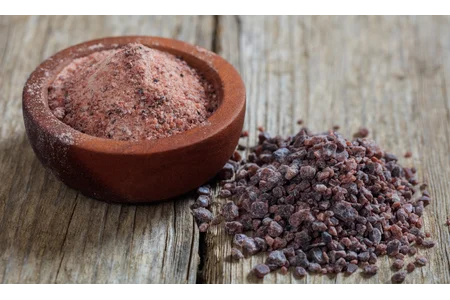
Black salt (Kala Namak) is an Indian rock salt that has a pungent flavor and aroma due to the presence of sodium sulfide along with sodium chloride. Salt has the taste of salty and sweet. It is heating in nature with heavy, wet, and penetrating qualities. It decreases the Vata dosha but increases the Pitta and Kapha. Its biomedical actions include being a digestive, alkaline, expectorant, demulcent, lubricant, laxative, emetic, water retentive, osmotic, irritant, and rubefacient.
From an Ayurvedic perspective, it stimulates the appetite, digests toxins, clears channels and obstructions, acts as a purgative, liquefies mucus, moves vata downwards (Apana), and settles the nerves. You can find this salt in most Indian grocery stores and online.
Black salt decreases the Vata dosha but increases Pitta and Kapha.
A note on salt: According to Ayurveda, salt is generally heating, but ‘Saindava’ salt is cooling and is the best choice in general for the Pitta Dosha. This salt is also known as Himalayan pink salt and is produced in the USA as Redmond salt from Utah.
Sugar

Sugar is the last ingredient for this beverage and is the sweetener of your choice. Personally, I use maple syrup, but sucanat is also easily dissolved. From an Ayurvedic doshic perspective you might also consider the following choices to balance the individual doshas.
- Vata Dosha: Jaggery (Indian Palm Sugar), Sucanat, Maple Syrup or Sugar & Honey
- Pitta Dosha: Maple Syrup or Sugar and Sucanat
- Kapha Dosha: Honey
Personally I use maple syrup, but sucanat is also easily dissolved.
Read more: Honey Ginger Remedy For Weight Loss, Immunity, Worms + More
ADVERTISEMENT
Jal Jeera Recipe (Jal Jeera Lemonade)

Yields
- 1/2 gallon
Equipment Needed
- Pot
- Strainer or Cheesecloth
Ingredients
- 1-quart fresh Lemon Juice
- 1 cup cumin seeds
- 4 cups water
- Sweetener of choice
- Black salt (optional)
Directions
Place the cumin seeds in cheesecloth, bringing in all the corners together. Tie into a ball using a piece of string. Alternatively, you can put the cumin directly in the water and strain it later (messier cleanup).
Put four cups of water in a pot. Add the cumin, cover, and bring to a boil. As soon as the water boils, turn the heat off and let the cumin steep in the pot for 30-45 minutes.
Once cool, combine the cumin water with lemon juice and sweetener. Add a pinch of salt to taste. The finished mixture can be served with ice and if you find it too sweet, dilute with water.
Easier Option: Use store-bought frozen, sweetened lemonade. Make the cumin water as described above and mix.


0 Comments