

Fennel seeds benefits have been recognized in Indian culture for centuries. Often placed near the exit of an Indian restaurant is a tray of small, colored candies—these are coated with fennel seeds. They have a sweet, almost licorice-like taste. Chewing fennel seeds after a meal is a common practice in India, known to aid digestion and freshen the breath.
Known in Hindi as saunf, fennel is often used in Indian recipes. A member of the parsley family, its scientific name is Foeniculum vulgare.
Historically, fennel seeds uses extend for treating:
- Indigestion
- Constipation
- Respiratory issues
- Eye problems
- Colic
- Menstrual disorders
- Anemia
- Diarrhea
- Flatulence
Nutritional benefits of fennel seeds
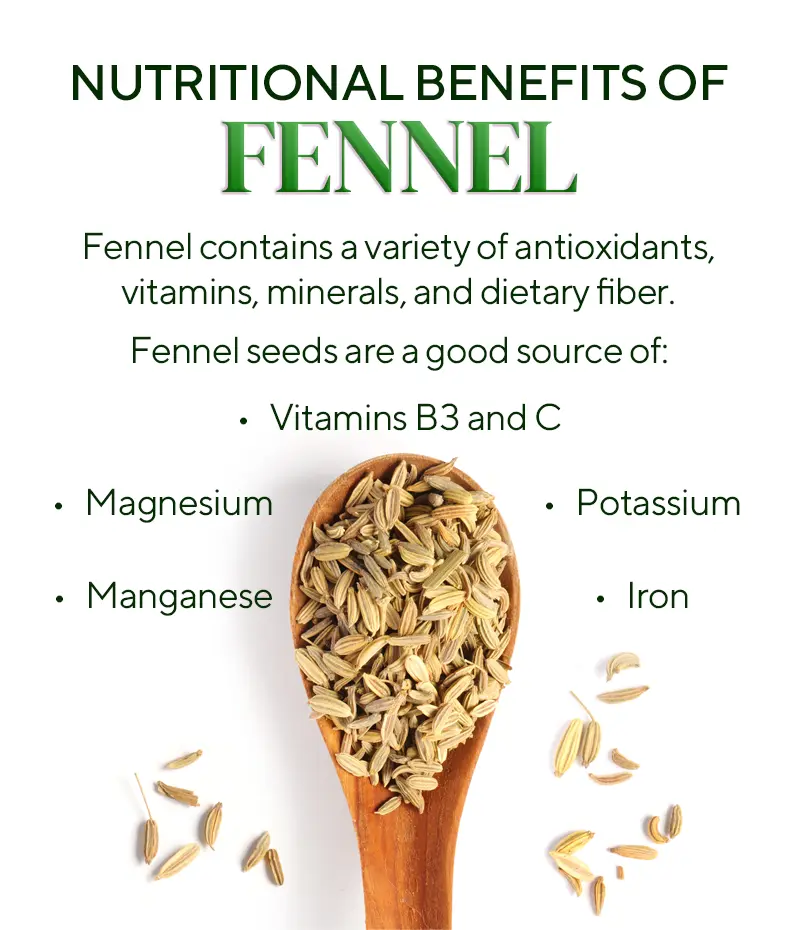
100 grams of fennel seeds provide almost 40 grams of dietary fiber. A majority of this fiber is metabolically inert insoluble fiber, which helps to increase the bulk of food by absorbing water throughout the digestive system and alleviating any constipation. The fibers, which are found in fennel seeds, remove toxins as well as cancerous substances from the intestines.
Dietary fibers bind to bile salts (which are produced from cholesterol) and this decreases their reabsorption in the colon, thus leading to lower LDL (the “lousy”) cholesterol levels. Along with flavonoid antioxidants, the fiber from fennel protects the colon mucus membrane from cancer.
Phytonutrients found in fennel seeds
Fennel seeds contain phytoestrogens and phytonutrients such as:
- Flavonoids
- Carotenoids
- Camphene
- Anethole
The phytonutrients found in fennel include the flavonoids rutin, quercetin, and various kaempferol glycosides, which provide powerful antioxidant actions. The anethole in fennel has been shown in studies to reduce inflammation and to prevent the occurrence of cancer.
Ayurvedic Take on Fennel
According to Ayurveda, the health benefits of fennel seeds extend to balancing all three doshas—Vata, Pitta, and Kapha.
- Vata
- Pitta
- Kapha
It has a sweet, slightly astringent, and bitter taste, or rasa. It is cooling and its after-taste or vipak is sweet.
Ayurveda advises against cooking fennel, as its active ingredients will die. It is better to steep fennel. Fennel is used as a digestive tonic, a mild laxative, and a diuretic. It helps remove toxins from the body.
ADVERTISEMENT
8 Ayurvedic home remedies using fennel seeds
- For colds, take ½ tsp of fennel powder with a pinch of sugar as a tea.
- For a fever, take 1 cup of grape juice with ½ tsp of fennel powder and ½ tsp of cumin powder.
- For gas, make a mixture of equal parts of roasted fennel, cumin, & celery seeds. Chew ½ – 1 tsp of this mixture after meals and then swallow with a cup of warm water.
- To purify your blood, consume a handful of raw fennel seeds in the morning and evening.
- If a breastfeeding baby has no appetite, make fennel tea. Steep 1 tsp of fennel seeds in a cup of water that has been heated over the stove. Cool and feed the baby 1 tsp of this tea every 10 to 15 minutes.
- For nursing moms who need to increase lactation, boil ½ liter of water and add 2 tsp of fennel seeds. Allow to cool, then strain, and add ½ tsp of raw honey to taste. Drinking 2 – 3 cups daily is ok for a nursing mom.
- For cases of heat stroke, soak a handful of fennel seeds in water overnight. Strain the water and add a pinch of salt before drinking.
- To promote bowel movements, chew 1 tsp of roasted fennel seeds after meals.
Cautions
It is recommended that pregnant women stay away from mixtures containing large amounts of fennel. In large quantities, it acts as a uterine stimulant. However, it may be used in meals. Nursing moms should not use fennel essential oil.
If using the volatile oil, avoid direct contact with the skin, as it can cause dermatitis for people who have sensitive skin.
While having multiple beneficial uses, certain components of essential oils, such as anethol, and a few chemicals present in fennel, can be problematic if ingested in large doses. These compounds kill bacteria and microbes in low doses, but they can be harmful if ingested in larger doses.
Please consult your physician or primary health care practitioner on the best way to incorporate herbal remedies into your life.
Other benefits of fennel seeds
As a diuretic and urinary alkalizer, fennel helps remove toxic substances from the body and assists in reducing rheumatism and swelling. Certain constituents of the essential oils in fennel are stimulants and they promote the secretion of digestive and gastric juices, reduce inflammation of the stomach and intestines, and aid in the proper absorption of nutrients from food. This spice has anti-acidic and anti-spasmodic properties as well; it relieves intestinal spasms or cramps.
Due to its fragrant smell, fennel is commonly used worldwide in toothpastes, breath fresheners, antacids, desserts, and in a variety of culinary creations. From Ayurveda to modern nutrition, the fennel seeds benefits are both time-tested and widely appreciated.
Pick up some fennel seeds or powder or a fennel bulb, spice up your life, and get cooking!





Hi
Can you provide examples on how to cook with fennel please?
Thank you
Hi! You can simply chew a small spoonful of roasted or plain fennel seeds after meals for healthy digestion. Alternatively, you can try sipping on fennel tea – Boil 1 tsp fennel seeds in 1 cup of water for 5–7 minutes. Strain and sip warm. In cooking, use fennel seeds while tempering dals, curries, or vegetable dishes. They add a mild sweetness, aid digestion, and prevent heaviness after meals.